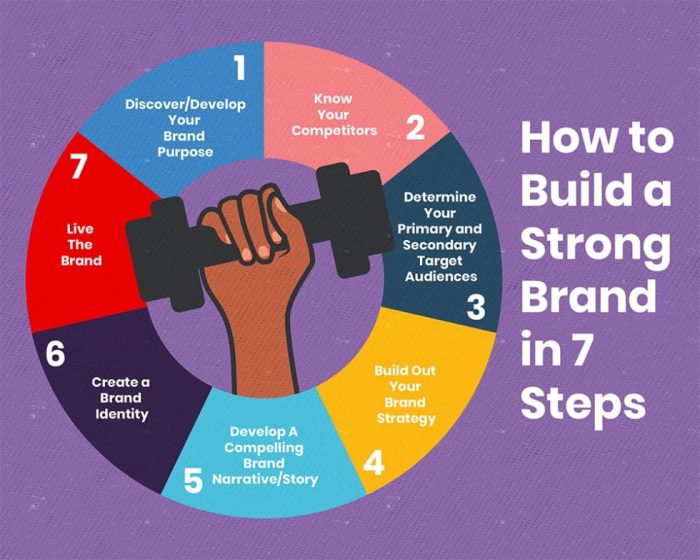
Building a successful brand is a multifaceted journey, requiring careful planning and execution. This comprehensive guide Artikels the essential steps involved in crafting a robust brand strategy, from defining your core identity to measuring its impact. We’ll explore how to understand your target audience, analyze your competitive landscape, and develop a compelling brand message that resonates with your ideal customer.
The process involves strategic channel selection, consistent engagement, and continuous evaluation to ensure your brand’s continued growth and success.
Through a detailed examination of each step, this guide provides a practical framework for building a brand that not only stands out but also thrives in a competitive market. We will delve into the nuances of brand identity, messaging, and audience engagement, equipping you with the tools and knowledge to navigate the complexities of brand building.
Defining Your Brand Identity
Crafting a strong brand identity is foundational to a successful brand strategy. It’s about more than just a logo; it’s about defining the core essence of your brand and how it connects with your audience on an emotional level. A well-defined brand identity provides a clear roadmap for all your marketing and communication efforts, ensuring consistency and building recognition.
This section will guide you through the process of defining your core values, developing a unique brand personality, and creating a visual representation that embodies your brand’s essence.
Core Values and Mission Statement
A clearly articulated mission statement and set of core values provide a compass for your brand. These guide decision-making, shaping everything from product development to customer service. For example, a company focused on sustainability might have core values of environmental responsibility, ethical sourcing, and community engagement, reflected in a mission statement such as “To provide high-quality products while minimizing our environmental impact and supporting sustainable communities.” These values should be authentic and genuinely reflect your company’s beliefs and practices.
They should be concise, memorable, and easily understood.
Brand Personality
Your brand personality is the human-like characteristics you give your brand. It’s how your brand “sounds” and “acts” in its communications. Is your brand playful and quirky, sophisticated and elegant, or rugged and dependable? Consider your target audience: what kind of personality would resonate most with them? A brand targeting young adults might adopt a playful and informal tone, while a brand targeting professionals might opt for a more serious and authoritative approach.
Consistency in your brand’s voice and tone across all platforms is crucial for maintaining a cohesive brand identity.
Visual Brand Representation
The visual aspects of your brand are crucial for creating a memorable and impactful first impression. These elements should reflect your brand personality and core values.
| Element | Description | Example | Rationale |
|---|---|---|---|
| Logo | A simple, memorable symbol that visually represents your brand. It should be versatile enough to work across different platforms and sizes. | A stylized tree with leaves forming the shape of a heart, representing growth and nurturing. | The logo visually communicates the brand’s core values of growth and care. |
| Color Palette | A selection of colors that evoke the desired emotions and associations. Consider the psychology of color when making your selections. | A palette of earthy greens and browns, accented with a warm, inviting orange. | These colors evoke feelings of nature, warmth, and trust, aligning with the brand’s values. |
| Typography | The fonts used in your branding should reflect your brand personality. Consider readability and visual appeal. | A clean, modern sans-serif font for headlines, paired with a slightly more playful script font for accents. | The font choices create a balance between professionalism and approachability. |
| Imagery | The type of photography or illustrations used should be consistent with your brand aesthetic. | High-quality, natural-looking photographs featuring diverse people interacting positively in natural settings. | This creates a sense of authenticity and connection with the brand. |
Identifying Your Target Audience
Understanding your target audience is crucial for a successful brand strategy. Without a clear picture of who you’re trying to reach, your marketing efforts will be scattered and ineffective. Defining your ideal customer allows for focused messaging, optimized product development, and ultimately, higher conversion rates. This involves a deep dive into their demographics, psychographics, and unmet needs.Knowing your target audience goes beyond simple demographics.
It requires understanding their motivations, values, and aspirations. This allows you to tailor your brand messaging to resonate deeply with your ideal customer, fostering a strong connection and brand loyalty. By crafting a compelling narrative that speaks directly to their needs and desires, you establish a clear competitive advantage.
Demographic and Psychographic Analysis of the Ideal Customer
This section details the characteristics of your ideal customer, encompassing both quantifiable demographic data and qualitative psychographic insights. Demographics provide a factual foundation, while psychographics reveal the underlying motivations and values that drive purchasing decisions. Combining both provides a comprehensive understanding.
- Demographics: Age, gender, location, income level, education, occupation, marital status, family size. For example, a luxury car brand might target high-income individuals aged 35-55, with professional careers and families.
- Psychographics: Lifestyle, values, interests, attitudes, opinions, personality traits. The same luxury car brand might appeal to individuals who value status, performance, and exclusivity, seeking a vehicle that reflects their success and refined taste.
- Needs and Pain Points: What problems does your product or service solve for your target audience? What are their unmet needs or frustrations? For the luxury car, the need might be for a reliable, high-performance vehicle that provides a comfortable and prestigious driving experience, while addressing potential pain points like maintenance costs or fuel efficiency (although this is often less of a concern within this demographic).
Examples of Successful Targeting Strategies
Several brands have successfully targeted specific audiences with tailored branding strategies. Analyzing these examples provides valuable insights into effective techniques.Nike, for example, successfully targets a broad range of athletic consumers, but tailors its marketing to specific sub-groups. Their “Just Do It” campaign resonates across many demographics, while specific product lines and marketing initiatives cater to different athletic pursuits and skill levels.
Similarly, Apple’s focus on user-friendliness and design appeals to a broad audience, but their marketing often highlights specific features that resonate with different segments, such as creative professionals or students.
Developing Buyer Personas
Creating detailed buyer personas helps to visualize and understand your ideal customers. These personas are fictional representations based on your research and data.
- Persona 1: The Aspiring Professional
-Age: 28-35, Gender: Female, Occupation: Marketing Manager, Income: $75,000 – $100,000, Values: Career success, work-life balance, personal growth, Motivations: Seeking professional development opportunities, improving efficiency, enhancing her image. - Persona 2: The Tech-Savvy Parent
-Age: 35-45, Gender: Male, Occupation: Software Engineer, Income: $120,000+, Values: Family, technology, convenience, Motivations: Seeking time-saving solutions, reliable technology for family use, ensuring children’s safety and well-being.
Market Research and Competitive Analysis
Understanding your market and competitive landscape is crucial for building a successful brand strategy. This involves a thorough examination of the market’s size, growth potential, and key players, alongside a detailed analysis of your own brand’s position within that landscape. This analysis will inform your strategic decisions and help you maximize your chances of success.This section will provide a comprehensive overview of the market research and competitive analysis process, guiding you through identifying key competitors, assessing your brand’s strengths and weaknesses relative to them, and exploring emerging market trends and opportunities.
Competitive Landscape Overview
A comprehensive understanding of the market landscape involves identifying all significant players within your industry. This includes direct competitors offering similar products or services, and indirect competitors offering alternative solutions that address the same customer needs. For example, in the coffee market, direct competitors for a new coffee shop might include established cafes in the same area. Indirect competitors could be tea shops, juice bars, or even home coffee brewing services.
Analyzing the market share, pricing strategies, and marketing approaches of these competitors provides valuable insights.
Comparative Brand Analysis
A critical aspect of competitive analysis is comparing your brand’s strengths and weaknesses against those of your key competitors. This allows for the identification of areas where your brand excels and areas requiring improvement. The following table illustrates a sample comparison:
| Feature | Brand A (Your Brand) | Brand B (Competitor 1) | Brand C (Competitor 2) |
|---|---|---|---|
| Product Quality | High-quality, ethically sourced beans | Average quality, mass-produced beans | High-quality, organic beans |
| Pricing | Mid-range | Low-range | High-range |
| Customer Service | Friendly, knowledgeable staff | Inconsistent service | Excellent, personalized service |
| Marketing & Branding | Strong social media presence, local partnerships | Limited marketing efforts | Luxury branding, targeted advertising |
This comparative analysis reveals Brand A’s (your brand) competitive advantages in product quality and marketing, while highlighting areas for improvement in pricing compared to Brand B and customer service compared to Brand C.
Market Trends and Opportunities
Identifying emerging market trends and opportunities is crucial for proactive strategic planning. For instance, the increasing consumer demand for sustainable and ethically sourced products presents a significant opportunity for a brand committed to these values. Similarly, the rise of online ordering and delivery services necessitates a strong online presence and efficient delivery system. Analyzing these trends allows for the development of strategies to capitalize on emerging opportunities and mitigate potential threats.
For example, a coffee shop could leverage the growing popularity of plant-based milk alternatives by offering a wider selection of these options.
Developing a Brand Messaging Strategy
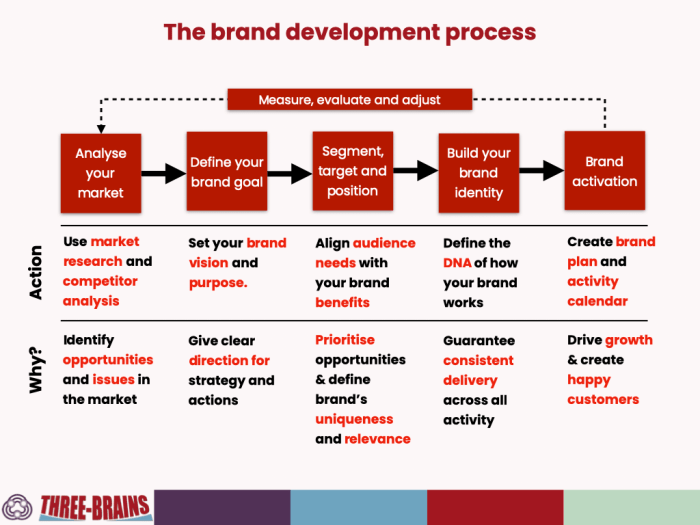
Crafting a compelling brand message is crucial for connecting with your target audience and establishing a strong brand identity. A well-defined messaging strategy ensures consistency across all communication channels, reinforcing your brand’s value proposition and ultimately driving business growth. This involves creating concise, memorable messages that resonate with your ideal customer and clearly articulate what makes your brand unique.A strong brand messaging strategy goes beyond simply stating what you do; it articulates thewhy* behind your brand and how it benefits the customer.
It’s about creating an emotional connection, building trust, and fostering loyalty. This section will guide you through the process of developing and implementing an effective brand messaging strategy.
Creating a Concise and Compelling Brand Message
A compelling brand message should be short, memorable, and clearly communicate your unique value proposition. It should answer the fundamental question: “Why should a customer choose your brand over the competition?” Consider the core benefits your product or service offers and distill them into a concise statement that captures the essence of your brand. For example, Nike’s “Just Do It” is a powerful message that transcends product specifics and resonates with a broad audience focused on motivation and achievement.
Similarly, Dove’s focus on real beauty empowers women and sets them apart from brands emphasizing unrealistic beauty standards. Your brand message should be adaptable to different contexts, maintaining consistency while allowing for nuance in specific campaigns.
Designing a Content Calendar
A content calendar is a crucial tool for organizing and scheduling your brand messaging across various platforms. This calendar should Artikel key messaging themes, the channels for distribution (social media, website, email marketing, etc.), and the timing of your content releases. For instance, a seasonal campaign might focus on specific promotions or product releases timed to coincide with holidays or events.
A consistent posting schedule helps maintain brand visibility and engagement. Furthermore, tracking the performance of different messaging themes allows for data-driven optimization of future campaigns. The calendar should also account for different content formats – videos, blog posts, infographics, social media updates – to keep your messaging fresh and engaging.
Examples of Effective Brand Messaging
Analyzing successful brand messaging from competitors and industry leaders can provide valuable insights. Consider Apple’s consistent emphasis on simplicity, elegance, and innovation in its marketing. Their messaging focuses on the user experience and the emotional connection to their products, rather than solely on technical specifications. Conversely, a company like Tesla successfully communicates its commitment to sustainable technology and electric vehicle innovation through its messaging, highlighting environmental benefits and technological advancement.
By studying these examples, you can identify successful strategies and adapt them to your own brand context, ensuring your messaging is both effective and impactful.
Choosing Your Brand Channels and Platforms
Selecting the right channels to broadcast your brand message is crucial for reaching your target audience effectively. A well-defined strategy ensures your marketing efforts are focused and yield the best possible return on investment. This involves understanding where your ideal customers spend their time online and offline, and tailoring your content to resonate with them in those specific environments.
Ignoring this step can lead to wasted resources and a diluted brand message.The process of choosing brand channels requires a strategic approach. It’s not simply about being present on every platform; it’s about being present on theright* platforms, where your target audience is most receptive to your message. This necessitates a thorough understanding of your target audience’s demographics, online behavior, and preferred communication styles.
Only then can you make informed decisions about where to allocate your resources.
Channel Selection Rationale
The rationale behind selecting specific channels hinges on several factors, including target audience demographics, budget constraints, and the nature of your brand message. For instance, a brand targeting a younger demographic might prioritize platforms like TikTok and Instagram, while a brand targeting a more professional audience might focus on LinkedIn and email marketing. A limited budget might necessitate focusing on a few highly effective channels, rather than spreading resources thinly across many platforms.
Finally, the complexity of your brand message may dictate the need for more in-depth content, which might be better suited to a blog or long-form video content rather than short-form social media posts.
Content Strategy per Channel
Before implementing a content strategy, it is vital to establish clear goals for each chosen channel. This involves defining specific, measurable, achievable, relevant, and time-bound (SMART) objectives. For example, a goal for Instagram might be to increase brand awareness by 20% in three months. This goal then guides the content creation process, ensuring all efforts contribute to achieving the overall objective.
- Website: The website serves as the central hub for all brand information. Content should include detailed product descriptions, high-quality images, customer testimonials, blog posts addressing relevant industry topics, and clear calls to action. A strong strategy is essential to ensure the website ranks well in search engine results.
- Social Media (e.g., Instagram, Facebook, TikTok, LinkedIn): Social media platforms allow for engaging directly with the target audience. Content should be tailored to the specific platform. For example, Instagram might focus on visually appealing images and short videos, while LinkedIn might focus on thought leadership articles and industry insights. Consistent posting is key, along with active community engagement.
- Email Marketing: Email marketing enables targeted communication with subscribers. Content should include newsletters, promotional offers, and valuable resources relevant to the audience’s interests. Segmentation allows for personalized messaging, increasing engagement and conversion rates. Email marketing campaigns should be tracked meticulously to measure their effectiveness.
Building Brand Awareness and Engagement
Building brand awareness and engagement is crucial for long-term success. It’s not enough to simply have a well-defined brand; you need to actively cultivate relationships with your target audience and ensure they’re consistently interacting with your brand in a positive way. This involves a multi-pronged approach encompassing various strategies and tactics across your chosen channels.A successful brand awareness and engagement strategy requires a carefully planned approach.
It involves understanding your audience’s preferences, leveraging the right channels, and consistently delivering engaging content. This section will Artikel key tactics and examples to help you achieve this.
Developing a Brand Awareness and Engagement Plan
A comprehensive plan is essential. This plan should detail specific objectives, target audiences, chosen channels, content strategy, budget allocation, and key performance indicators (KPIs). For instance, a goal might be to increase social media engagement by 25% within six months. This goal should then be broken down into smaller, actionable steps, such as creating a specific number of social media posts per week, engaging with comments and direct messages, and running targeted advertising campaigns.
Regular monitoring of KPIs will allow for adjustments to the plan as needed, ensuring optimal performance.
Specific Tactics for Building Customer Relationships
Building strong customer relationships is paramount. This goes beyond simply making a sale; it’s about fostering loyalty and advocacy. Effective tactics include personalized communication, responsive customer service, creating a sense of community, and offering exclusive rewards programs. For example, sending personalized birthday emails, actively responding to customer feedback on social media, and hosting online or in-person events can all strengthen customer relationships.
A loyalty program offering exclusive discounts or early access to new products further incentivizes repeat business and brand advocacy.
Examples of Engaging Content Formats
The type of content you create should be tailored to your chosen platforms and your target audience. For instance, Instagram might benefit from high-quality visuals and short, engaging videos, while LinkedIn might be more suitable for long-form articles and thought leadership pieces. Examples of engaging content formats include:
- Infographics: Visually appealing representations of data and information, ideal for quickly conveying complex topics.
- Short-form videos (TikTok, Reels, YouTube Shorts): Captivating visuals and concise messaging perfect for grabbing attention and driving engagement.
- Live Q&A sessions: Opportunities for direct interaction with your audience, fostering a sense of community and building trust.
- Blog posts and articles: In-depth content providing valuable information and establishing your brand as a thought leader.
- User-generated content (UGC): Reposting customer photos or videos featuring your product or service, showcasing authentic brand experiences.
Measuring and Evaluating Your Brand Strategy
Building a successful brand isn’t a one-time event; it’s an ongoing process requiring consistent monitoring and adaptation. Measuring and evaluating your brand strategy allows you to understand what’s working, what’s not, and how to optimize your efforts for maximum impact. This involves establishing clear metrics, tracking progress, and using the data gathered to inform future decisions.A robust system for tracking key performance indicators (KPIs) is essential for understanding your brand’s performance and progress towards its objectives.
This allows for data-driven decision making, enabling you to refine your strategy and maximize return on investment (ROI). Without consistent measurement, it’s difficult to determine the effectiveness of your brand-building initiatives.
KPI Tracking System Design
A well-designed KPI tracking system should align directly with your overall brand strategy goals. For example, if a primary goal is to increase brand awareness, relevant KPIs might include website traffic, social media engagement (likes, shares, comments), and mentions in relevant media outlets. If the focus is on driving sales, KPIs could include conversion rates, customer acquisition cost (CAC), and average order value (AOV).
To effectively track these, you’ll need to utilize analytics tools available through your chosen platforms (website analytics, social media insights, CRM data, etc.). Regularly reviewing these dashboards provides valuable insights into performance trends. Consider using a spreadsheet or dedicated project management software to centralize and analyze your data. For example, a simple spreadsheet could track website traffic, social media engagement, and sales data on a weekly or monthly basis, allowing for easy visualization of trends and progress.
Measuring Brand-Building Success
Measuring the success of your brand-building efforts requires a multifaceted approach. It’s not enough to simply track individual KPIs in isolation; it’s crucial to consider how they interrelate and contribute to your overall brand goals. For example, a high social media engagement rate might indicate strong brand awareness, but it’s meaningless if it doesn’t translate into increased website traffic or sales.
Therefore, a holistic view of your data is essential. Analyzing the correlation between different KPIs provides a more comprehensive understanding of your brand’s performance. For instance, analyzing the relationship between social media campaign reach and website conversions allows you to assess the campaign’s effectiveness in driving sales.
Adapting and Improving Brand Strategy
Regularly reviewing your performance data is crucial for identifying areas for improvement and adapting your brand strategy accordingly. This iterative process involves analyzing your KPIs, identifying trends, and making data-driven adjustments to your approach. For example, if your social media engagement is low despite a significant investment in content creation, you might need to revise your content strategy, experiment with different platforms, or adjust your posting schedule.
Conversely, if a particular campaign is performing exceptionally well, you might consider scaling it up or replicating its success in other areas. This continuous feedback loop ensures that your brand strategy remains relevant, effective, and aligned with evolving market dynamics and customer preferences. A company like Nike, for example, constantly adapts its marketing strategy based on consumer feedback and market trends, ensuring its brand remains relevant and appealing.
Brand Equity, Strategy, and Management Discussion
Brand equity, brand strategy, and brand management are intricately linked components of a successful business. A well-defined brand strategy is the architect of brand equity, while brand management provides the ongoing maintenance and refinement necessary to sustain it. Understanding their interconnectedness is crucial for long-term brand success.A strong brand strategy directly influences the development of brand equity. Brand equity represents the value associated with a brand, encompassing consumer perception, loyalty, and the resulting premium a brand commands in the marketplace.
A clear strategy provides the roadmap for creating a consistent brand identity, targeting the right audience, and communicating the brand’s value proposition effectively. This consistency builds trust and familiarity, fostering brand loyalty and, ultimately, enhancing brand equity. For example, Apple’s consistent focus on design, user experience, and premium pricing has cultivated significant brand equity, enabling them to charge a premium for their products.
The Relationship Between Brand Equity, Brand Strategy, and Brand Management
Brand equity is the outcome of a well-executed brand strategy, consistently managed over time. The brand strategy defines the desired brand positioning, target audience, and value proposition. Brand management encompasses all the activities required to implement and maintain this strategy, ensuring the brand remains consistent and relevant. Effective brand management safeguards and enhances the brand’s equity. Without robust management, even the most brilliant strategy may falter.
Key Elements of Effective Brand Management
Effective brand management requires a multi-faceted approach, encompassing several key elements. These elements work synergistically to protect and enhance brand equity.
- Consistent Brand Messaging: Maintaining a unified brand voice and message across all touchpoints ensures a cohesive brand experience for consumers. Inconsistency can erode trust and dilute brand equity.
- Monitoring Brand Reputation: Actively tracking online mentions, reviews, and social media conversations allows for proactive management of brand perception and rapid response to any negative feedback.
- Customer Relationship Management (CRM): A robust CRM system facilitates personalized communication and fosters strong customer relationships, driving loyalty and advocacy.
- Brand Audits and Reviews: Regularly assessing brand performance against strategic goals helps identify areas for improvement and ensures the brand remains relevant and competitive.
- Adaptability and Innovation: Brands must remain adaptable to changing market trends and consumer preferences. Continuous innovation helps maintain brand relevance and prevent stagnation.
Ultimately, a well-defined brand strategy is more than just a marketing plan; it’s the foundation upon which a lasting and successful business is built. By diligently following these steps—from defining your core values to meticulously measuring your results—you can create a brand that not only resonates with your target audience but also establishes a strong position within the market. Remember that consistent effort, adaptation based on data, and a genuine understanding of your customers are key to long-term brand success.
FAQ Summary
What is the difference between brand identity and brand image?
Brand identity is what you
-intend* your brand to be (values, mission, personality), while brand image is how your target audience
-perceives* your brand.
How often should I review and update my brand strategy?
Regularly, at least annually, or more frequently if significant market changes occur or your business undergoes major transformations.
What if my brand strategy isn’t working?
Analyze your KPIs, identify weaknesses, and adjust your strategy accordingly. Consider seeking expert advice if needed.
How can I measure brand equity?
Through metrics like brand awareness, customer loyalty, perceived quality, and willingness to pay a premium.
What is the role of a brand style guide?
It ensures consistent brand messaging and visual representation across all platforms, maintaining a unified brand identity.


