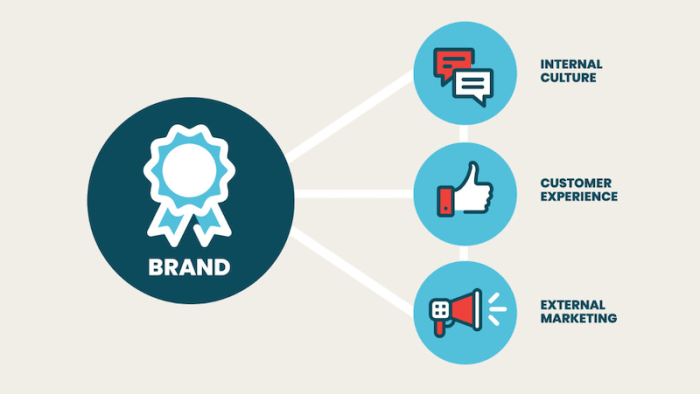
In today’s competitive marketplace, a well-defined brand strategy is no longer a luxury but a necessity for survival and growth. It’s the compass guiding a company’s journey, ensuring consistent messaging, and ultimately driving customer loyalty and market share. Understanding what constitutes a robust brand strategy is paramount for businesses aiming to establish a strong presence and lasting impact.
This guide delves into the core elements of brand strategy, from defining its fundamental components and differentiating it from marketing strategy to building brand equity and measuring its effectiveness. We’ll explore practical examples, hypothetical scenarios, and actionable steps to help you navigate the complexities of crafting and implementing a successful brand strategy, regardless of your industry or business size.
Defining Brand Strategy
A brand strategy is a long-term plan that Artikels how a company will build and maintain a strong, positive brand image in the minds of its target audience. It’s more than just a logo and a tagline; it’s a comprehensive roadmap that guides all aspects of a business, ensuring consistency and coherence in its messaging and interactions with customers.
A successful brand strategy ultimately drives profitability by fostering customer loyalty and creating a competitive advantage.Brand strategy encompasses several key components working in harmony. A strong brand strategy defines the target audience, articulates a clear and compelling brand promise, establishes a unique brand personality and voice, and Artikels how the brand will be experienced across all touchpoints. Consistent messaging, visual identity, and customer experience are critical elements.
Furthermore, a well-defined brand strategy includes a plan for measuring and monitoring its effectiveness, allowing for adjustments and refinements as needed.
Core Components of a Successful Brand Strategy
A robust brand strategy relies on several interconnected pillars. First, understanding the target audience is paramount; who are they, what are their needs and desires, and how do they perceive the brand and its competitors? Next, a clear and concise brand promise—what unique value does the brand offer?—must be established. This promise should resonate with the target audience and differentiate the brand from competitors.
The brand’s personality and voice—its tone, style, and overall communication approach—should reflect its values and resonate with the target audience. Finally, the brand experience must be meticulously crafted across all customer touchpoints, ensuring a seamless and positive interaction at every stage of the customer journey. This includes everything from website design to customer service interactions.
Brand Strategy vs. Marketing Strategy
While often used interchangeably, brand strategy and marketing strategy are distinct but interconnected concepts. Brand strategy focuses on building and managing a brand’s identity and image over the long term, while marketing strategy focuses on the specific tactics and actions used to promote the brand and achieve short-term marketing objectives. Think of it this way: brand strategy is the “what” – defining the brand’s essence and positioning – while marketing strategy is the “how” – outlining the specific actions to reach the target audience and achieve sales goals.
A strong marketing strategy relies on a strong brand strategy as its foundation.
Examples of Strong Brand Strategies
Apple consistently delivers a premium brand experience, emphasizing simplicity, design, and innovation. Their carefully curated retail stores, minimalist website design, and consistent messaging across all platforms create a powerful and cohesive brand image. Nike, on the other hand, focuses on empowerment and athletic achievement. Their “Just Do It” campaign resonates with their target audience, inspiring them to push their limits.
Both companies have cultivated strong brand equity through consistent messaging, high-quality products, and a commitment to their brand values. Their success demonstrates the long-term value of a well-defined and executed brand strategy.
Hypothetical Brand Strategy for a Tech Startup
Let’s consider a hypothetical tech startup called “SynapseAI,” developing AI-powered productivity tools for freelancers. SynapseAI’s brand strategy would center on the themes of efficiency, empowerment, and seamless integration. The target audience would be independent professionals seeking to streamline their workflows and increase productivity. The brand promise would be to provide intuitive, powerful AI tools that empower freelancers to achieve more in less time.
The brand personality would be sophisticated yet approachable, reflecting both the power of the technology and the human-centered approach to its design. Marketing efforts would focus on digital channels, leveraging content marketing, social media engagement, and targeted advertising to reach the target audience. The brand experience would emphasize ease of use, exceptional customer support, and a vibrant online community fostering collaboration and knowledge sharing.
The long-term goal would be to establish SynapseAI as the leading provider of AI-powered productivity tools for freelancers, building a loyal customer base through consistent brand messaging and a superior user experience.
Brand Equity
Brand equity represents the added value a brand brings to a product or service beyond its functional attributes. It’s the intangible asset that influences consumer perception, loyalty, and ultimately, profitability. A strong brand equity translates to higher prices, increased market share, and greater resilience against competition.
Key Drivers of Brand Equity
Several factors contribute to the development and strength of brand equity. These drivers work synergistically, reinforcing each other to create a powerful and enduring brand. Understanding these drivers is crucial for building a successful brand strategy. These include brand awareness, perceived quality, brand associations, brand loyalty, and other proprietary brand assets. For instance, a company’s unique patented technology or a distinctive brand personality contributes significantly to its overall equity.
Methods for Measuring Brand Equity
Measuring brand equity requires a multifaceted approach, combining quantitative and qualitative methods to gain a comprehensive understanding of its value. Quantitative methods provide numerical data, allowing for objective analysis and comparison. Qualitative methods delve deeper into consumer perceptions and emotional responses.
Quantitative Methods for Measuring Brand Equity
Quantitative methods often involve surveys, experiments, and analyses of sales data. For example, a survey might assess brand awareness and purchase intent. Sales data can reveal the price premium a brand commands. Brand tracking studies monitor brand equity metrics over time, providing insights into brand performance and the effectiveness of marketing efforts. A/B testing different marketing campaigns can quantitatively assess the impact of specific brand-building activities.
Qualitative Methods for Measuring Brand Equity
Qualitative methods, such as focus groups and in-depth interviews, provide rich insights into consumer perceptions, attitudes, and beliefs about a brand. These methods uncover the emotional connections consumers have with a brand, which is often a key driver of brand loyalty. Analyzing social media conversations can also provide valuable qualitative data on brand sentiment and reputation. For instance, sentiment analysis of social media posts can reveal the overall positive or negative perception of a brand.
Comparison of Brand Equity Assessment Models
Several models exist for assessing brand equity. The Interbrand model, for example, focuses on the financial value of a brand, considering factors like brand strength and brand revenue. The BrandZ model, developed by Millward Brown, incorporates consumer perceptions and brand valuation. These models differ in their methodologies and the specific metrics they employ, but all aim to quantify the value of a brand.
The choice of model depends on the specific needs and objectives of the assessment.
Factors Influencing Brand Equity
The following table summarizes key factors influencing brand equity, their descriptions, measurement methods, and examples:
| Factor | Description | Measurement Method | Example |
|---|---|---|---|
| Brand Awareness | The extent to which consumers are familiar with the brand. | Surveys, brand recall and recognition tests | High percentage of consumers recognizing the Nike swoosh logo. |
| Perceived Quality | Consumers’ beliefs about the quality and performance of the brand’s products or services. | Customer satisfaction surveys, performance tests, competitor comparisons | High ratings for Apple products in terms of design and user experience. |
| Brand Associations | The thoughts, feelings, and images consumers associate with the brand. | Focus groups, brand personality scales, qualitative analysis of online reviews | Associating Coca-Cola with happiness and refreshment. |
| Brand Loyalty | The degree to which consumers repeatedly purchase and recommend the brand’s products or services. | Customer retention rates, repeat purchase rates, net promoter score (NPS) | High customer lifetime value for brands like Amazon. |
| Proprietary Brand Assets | Unique assets owned by the brand, such as patents, trademarks, or unique brand experiences. | Patent filings, trademark registrations, market research on brand experiences | A company’s patented technology for a specific product. |
The Role of Brand Management in Strategy Execution

Effective brand management is the cornerstone of successful brand strategy execution. It ensures the consistent delivery of the brand promise across all touchpoints, fostering strong customer relationships and driving long-term growth. Without robust brand management, even the most meticulously crafted brand strategy risks falling short of its objectives.Brand management plays a crucial role in maintaining brand consistency by acting as a central point of control and coordination for all brand-related activities.
This ensures that the brand’s messaging, visual identity, and overall customer experience remain unified and aligned with the overarching brand strategy. This consistency builds trust and recognition, making the brand more memorable and appealing to consumers.
Brand Manager Responsibilities
The brand manager is responsible for overseeing all aspects of a brand’s development and maintenance. This encompasses a broad range of activities designed to build and protect brand equity. Their actions directly impact the brand’s performance and market standing.
- Market Research and Analysis: Conducting thorough market research to understand consumer preferences, competitor activities, and market trends, informing strategic brand decisions.
- Brand Positioning and Messaging: Defining the brand’s unique value proposition and crafting compelling messaging that resonates with the target audience. This includes developing the brand’s voice and tone.
- Brand Guidelines Development and Enforcement: Creating and maintaining comprehensive brand guidelines that dictate how the brand is represented across all platforms. This ensures consistent application of the brand’s visual identity, messaging, and overall experience.
- Campaign Management and Execution: Overseeing the development and execution of marketing campaigns that align with the brand strategy and objectives. This involves close collaboration with marketing, advertising, and creative teams.
- Budget Management and Reporting: Managing the brand’s marketing budget and tracking key performance indicators (KPIs) to measure the effectiveness of brand-building activities. Regular reporting to stakeholders is essential.
- Brand Monitoring and Reputation Management: Actively monitoring the brand’s reputation and addressing any negative feedback or crises promptly. This involves tracking online mentions, engaging with consumers, and managing public relations.
Implementing a Brand Strategy: A Step-by-Step Process
Successful brand strategy implementation requires a structured approach. This process ensures that all activities are aligned and contribute to the overall brand objectives.
- Conduct a Brand Audit: Assess the current state of the brand, including its strengths, weaknesses, opportunities, and threats. This forms the foundation for strategic planning.
- Define Target Audience: Clearly identify the desired customer segments and understand their needs, preferences, and behaviors. This informs all subsequent brand-building activities.
- Develop Brand Positioning: Craft a clear and concise brand positioning statement that articulates the brand’s unique value proposition and how it differentiates itself from competitors.
- Create Brand Guidelines: Develop comprehensive guidelines that specify the brand’s visual identity (logo, colors, typography), messaging, and overall tone of voice. These guidelines ensure brand consistency.
- Develop a Marketing Plan: Artikel specific marketing activities designed to achieve the brand’s objectives. This includes defining target audiences, selecting appropriate channels, and setting measurable goals.
- Implement and Monitor: Execute the marketing plan and continuously monitor its performance. Track key metrics, analyze results, and make adjustments as needed.
- Evaluate and Refine: Regularly evaluate the effectiveness of the brand strategy and make adjustments based on performance data and market feedback. Brands are not static entities; they evolve.
The Contribution of Brand Guidelines to Successful Brand Management
Brand guidelines serve as a crucial tool for maintaining brand consistency and ensuring that the brand is represented accurately and effectively across all platforms. They act as a single source of truth for all brand-related decisions, minimizing inconsistencies and protecting brand equity. Without comprehensive guidelines, the brand’s image can become diluted and lose its impact. For example, a well-defined guideline on logo usage will prevent variations that could weaken brand recognition.
Similarly, consistent tone of voice guidelines across all marketing materials will ensure a cohesive and professional brand image. A clearly defined brand voice, for instance, might be described as “friendly and approachable” or “sophisticated and authoritative,” depending on the brand’s overall positioning.
Target Audience and Brand Positioning
Understanding your target audience and crafting a compelling brand position are crucial for successful brand strategy. A well-defined target audience allows for focused marketing efforts, resulting in higher conversion rates and stronger brand loyalty. Effective brand positioning differentiates your brand from competitors, establishing a unique and memorable identity in the minds of consumers.
Identifying and understanding your target audience involves a multifaceted process that goes beyond simple demographics. It requires in-depth market research, including analyzing existing customer data, conducting surveys and focus groups, and employing competitive analysis to paint a complete picture of your ideal customer. This understanding informs decisions about product development, messaging, and marketing channel selection.
Defining Target Audience Through Market Research
Effective target audience identification relies heavily on robust market research. This includes quantitative methods like surveys and sales data analysis to identify demographic trends (age, gender, location, income, education) and purchase patterns. Qualitative methods, such as focus groups and in-depth interviews, provide valuable insights into consumer attitudes, motivations, and lifestyle choices. Analyzing competitor strategies helps to identify underserved market segments and potential opportunities for differentiation.
By combining quantitative and qualitative data, a comprehensive understanding of the target audience emerges. For example, a company launching a new line of organic skincare products might conduct surveys to determine the age range and income level of its target market, while simultaneously conducting focus groups to understand consumer preferences for specific ingredients and product formulations.
Examples of Effective Brand Positioning Strategies
Several successful brands demonstrate effective brand positioning. Consider Apple, which positions itself as a premium brand offering innovative, user-friendly technology. Their focus on design, simplicity, and a seamless user experience differentiates them from competitors. Conversely, Walmart positions itself as a value-oriented retailer, emphasizing low prices and wide selection. This clear and consistent positioning resonates with price-conscious consumers.
Nike’s positioning focuses on athletic performance and inspiration, associating the brand with achievement and empowerment. These examples highlight the importance of a clear, concise, and consistent brand message that resonates with the target audience.
Comparison of Brand Positioning Approaches
Value-based positioning emphasizes the benefits and value proposition of a product or service. It focuses on what the brand offers customers and how it improves their lives. For example, a luxury car brand might position itself based on superior craftsmanship, performance, and exclusivity. Competitive positioning, on the other hand, directly compares the brand to its competitors, highlighting its unique advantages.
A budget airline might position itself as a more affordable alternative to traditional carriers, emphasizing its low fares and convenient flight schedules. Both approaches are valid; the optimal choice depends on the brand’s unique strengths and the competitive landscape. A hybrid approach, combining elements of both value-based and competitive positioning, is often the most effective strategy.
Detailed Persona: The Eco-Conscious Millennial
This persona represents a key segment of the target audience for a hypothetical sustainable clothing brand.
| Demographic | Psychographic | Buying Habits |
|---|---|---|
| Age: 25-35 | Values sustainability and ethical consumption; concerned about environmental issues; active on social media; interested in fashion and self-expression; seeks authenticity and transparency; values community and social impact. | Prefers online shopping; researches brands’ ethical and environmental practices before purchasing; willing to pay a premium for sustainable and ethically produced clothing; influenced by social media influencers and online reviews; values quality and durability over fast fashion trends; seeks brands that align with their values. |
| Gender: Female | ||
| Location: Urban areas | ||
| Income: Middle to upper-middle class | ||
| Education: College graduate |
Brand Strategy and the Competitive Landscape
A successful brand strategy doesn’t exist in a vacuum; it’s constantly shaped and reshaped by the competitive forces at play within its market. Understanding the competitive landscape is crucial for developing a strategy that not only survives but thrives. This involves a deep dive into the actions and strategies of competitors, identifying opportunities, and ultimately, establishing a unique and defensible position.Competitive forces significantly influence brand strategy by dictating market share potential, pricing strategies, product development cycles, and overall marketing approaches.
Ignoring these forces can lead to missed opportunities, diminished market share, and ultimately, brand failure. A robust competitive analysis is the foundation upon which a successful brand strategy is built.
Competitive Analysis: A Foundation for Strategic Decisions
Conducting a thorough competitive analysis involves systematically identifying, evaluating, and monitoring competitors’ strengths and weaknesses. This process helps businesses understand their position within the market, identify potential threats and opportunities, and refine their strategies accordingly. The analysis should extend beyond simply listing competitors; it needs to delve into their target markets, marketing strategies, pricing models, and product portfolios. By understanding these aspects, a brand can pinpoint areas for differentiation and innovation.
For example, analyzing a competitor’s marketing campaigns can reveal effective messaging strategies, while examining their pricing models can inform a brand’s own pricing decisions.
Key Brand Differentiators: Standing Out from the Crowd
Once the competitive landscape is understood, the next step is to identify key differentiators that make a brand stand out. These differentiators could be based on product features, quality, pricing, brand personality, customer service, or a unique combination of these factors. A strong brand often leverages a combination of factors to create a compelling value proposition. For instance, a luxury brand might differentiate itself through superior quality and exclusive design, while a budget-friendly brand might focus on affordability and convenience.
Creating a unique brand identity and communicating it effectively are crucial for building brand loyalty and attracting customers.
Competitive Matrix: A Comparative Analysis of Competing Brands
The following competitive matrix compares three major players in the athletic footwear market: Nike, Adidas, and Under Armour. This is a simplified example, and a real-world analysis would be far more detailed.
| Brand | Target Audience | Key Differentiators | Strengths | Weaknesses |
|---|---|---|---|---|
| Nike | Broad, encompassing various athletic activities and lifestyle consumers | Innovation, strong brand recognition, extensive distribution network, celebrity endorsements | High brand recognition, strong innovation, global reach | Higher price point, potential ethical concerns regarding labor practices |
| Adidas | Focuses on style and performance, appealing to a broad audience but with a stronger emphasis on fashion-conscious consumers | Collaborations with designers, retro designs, sustainable initiatives | Strong brand heritage, stylish designs, growing sustainability focus | Can sometimes lag behind Nike in innovation |
| Under Armour | Performance-oriented athletes and fitness enthusiasts | Technological advancements in fabric and design, focus on athletic performance | Strong performance technology, growing market share | Lower brand recognition compared to Nike and Adidas, potentially less diverse product line |
Measuring Brand Strategy Effectiveness
Effectively gauging the success of a brand strategy is crucial for continuous improvement and achieving long-term goals. This involves identifying key performance indicators (KPIs), implementing robust tracking methods, and leveraging customer feedback for iterative refinement. A data-driven approach ensures that brand investments are yielding the desired results and that the strategy remains aligned with evolving market dynamics and consumer preferences.
Key Performance Indicators (KPIs) for Evaluating Brand Strategy Success
A selection of relevant KPIs provides a comprehensive view of brand health and performance. These metrics offer quantifiable insights into the effectiveness of various brand initiatives. Focusing on a balanced set of KPIs ensures a holistic understanding of brand progress.
Examples of such KPIs include:
- Brand Awareness: Measured through surveys, social media listening, and website analytics, reflecting the percentage of the target audience familiar with the brand.
- Brand Recall: Assessing the ease with which consumers remember the brand when prompted, indicating the strength of brand recognition.
- Brand Perception: Evaluating consumer attitudes and opinions towards the brand, encompassing attributes like quality, trust, and innovation. This is often measured through surveys and sentiment analysis.
- Customer Satisfaction (CSAT): Gauging customer happiness with products, services, and overall brand experience. High CSAT scores indicate a strong brand-customer relationship.
- Net Promoter Score (NPS): Measuring customer loyalty and willingness to recommend the brand to others. A high NPS suggests strong brand advocacy.
- Market Share: Tracking the brand’s proportion of the total market, reflecting its competitive standing and overall success.
- Return on Investment (ROI): Calculating the financial return on brand-building activities, demonstrating the efficiency and effectiveness of brand investments.
Methods for Tracking Brand Awareness and Perception
Tracking brand awareness and perception requires a multi-faceted approach, combining quantitative and qualitative data collection methods. This ensures a comprehensive understanding of how the brand is perceived in the marketplace.
Several methods can be employed:
- Surveys: Online and offline surveys provide direct feedback on brand awareness, perception, and customer satisfaction.
- Social Media Listening: Monitoring social media platforms for brand mentions, sentiment analysis, and consumer conversations to understand brand perception and identify areas for improvement.
- Focus Groups: Facilitated discussions with target audience segments provide in-depth qualitative insights into brand perception and consumer needs.
- Website Analytics: Tracking website traffic, bounce rates, and time spent on site provides insights into brand engagement and online visibility.
- Competitor Analysis: Benchmarking against competitors helps understand relative brand performance and identify opportunities for improvement.
Using Customer Feedback to Refine Brand Strategy
Customer feedback is invaluable for iterative improvements to brand strategy. Actively soliciting and analyzing feedback allows for informed adjustments and ensures the brand remains relevant and resonates with its target audience.
Strategies for leveraging customer feedback include:
- Implementing customer feedback mechanisms: Establishing systems for collecting feedback, such as online surveys, feedback forms, and customer service interactions.
- Analyzing feedback data: Identifying trends and patterns in customer feedback to understand areas of strength and weakness.
- Prioritizing feedback based on impact: Focusing on feedback that has the greatest potential to impact brand strategy and customer satisfaction.
- Implementing changes based on feedback: Making adjustments to products, services, marketing messages, and other brand elements based on insights gleaned from customer feedback.
- Measuring the impact of changes: Tracking key metrics to assess the effectiveness of changes made in response to customer feedback.
Brand Strategy Effectiveness Dashboard
A dashboard provides a visual overview of key metrics, facilitating effective monitoring and analysis of brand strategy performance. The dashboard should be easily accessible and regularly updated to reflect current performance.
| Metric | Target | Current Performance | Trend |
|---|---|---|---|
| Brand Awareness | 70% | 65% | Increasing |
| Brand Recall | 50% | 45% | Stable |
| Brand Perception (Positive Sentiment) | 80% | 75% | Slightly Decreasing |
| Customer Satisfaction (CSAT) | 4.5/5 | 4.2/5 | Improving |
| Net Promoter Score (NPS) | 70 | 65 | Stable |
| Market Share | 15% | 12% | Decreasing |
| Return on Investment (ROI) | 20% | 18% | Stable |
Long-Term Brand Vision and Sustainability
A robust brand strategy requires a long-term perspective, extending beyond immediate gains to encompass a sustainable future. Establishing a clear vision and integrating sustainability are crucial for building enduring brand equity and fostering customer loyalty in an increasingly conscious marketplace. This section explores the importance of long-term vision, the integration of sustainability, the benefits of a strong brand purpose, and provides an example of a long-term brand vision statement.Establishing a long-term brand vision provides a guiding star for all brand-related decisions.
It ensures that marketing efforts, product development, and overall business strategies remain aligned with the brand’s core values and aspirational goals. Without a clear vision, a brand risks becoming adrift, reacting to short-term trends rather than proactively shaping its destiny. A well-defined vision allows for strategic planning, resource allocation, and consistent messaging, leading to greater brand coherence and market impact.
The Importance of Establishing a Long-Term Brand Vision
A long-term brand vision acts as a compass, guiding the brand’s evolution and ensuring consistency in its message and actions over time. It provides a framework for decision-making, allowing the brand to navigate challenges and capitalize on opportunities while staying true to its core values. For example, Patagonia’s commitment to environmental sustainability has guided its product development, marketing, and social initiatives for decades, fostering strong customer loyalty and brand recognition.
This long-term vision has allowed them to weather economic fluctuations and remain a market leader in outdoor apparel.
Integrating Sustainability into Brand Strategy
Integrating sustainability into a brand strategy involves more than just adopting eco-friendly practices; it requires a fundamental shift in how the brand operates and interacts with its stakeholders. This includes evaluating the environmental and social impact of the entire value chain, from sourcing raw materials to product disposal. Companies can achieve this through initiatives such as reducing carbon emissions, promoting ethical sourcing, using sustainable packaging, and supporting environmental causes.
For example, Unilever’s Sustainable Living Plan demonstrates a commitment to reducing its environmental footprint while improving the livelihoods of its suppliers and consumers. This integrated approach has not only enhanced the brand’s reputation but also driven business growth.
The Benefits of a Strong Brand Purpose
A strong brand purpose goes beyond simply selling products or services; it articulates the brand’s reason for being and its contribution to the world. It provides a sense of meaning and purpose for both the brand and its consumers, fostering deeper connections and loyalty. A well-defined purpose can differentiate a brand from competitors, attract and retain talent, and inspire positive social impact.
For instance, TOMS Shoes’ “One for One” model, where a pair of shoes is donated for every pair purchased, exemplifies a powerful brand purpose that resonates deeply with consumers. This purpose-driven approach has contributed significantly to the brand’s success.
Example Long-Term Brand Vision Statement
To be a globally recognized leader in sustainable innovation, empowering communities and preserving our planet through ethically sourced products and responsible practices, fostering a legacy of positive impact for generations to come.
Ultimately, a successful brand strategy is more than just a logo and a tagline; it’s a holistic approach that aligns a company’s values, mission, and goals with its target audience’s needs and aspirations. By carefully considering each aspect—from brand positioning and competitive analysis to consistent messaging across channels and long-term vision—businesses can build a powerful brand that resonates with customers and drives sustainable growth.
This comprehensive understanding allows for informed decision-making and a strategic approach to building a brand that stands the test of time.
General Inquiries
What’s the difference between branding and brand strategy?
Branding is the outward expression of your brand (logo, voice, etc.), while brand strategy is the underlying plan to build and manage that brand successfully.
How long does it take to develop a brand strategy?
The timeframe varies depending on the complexity of the business and the depth of research required. It can range from a few weeks to several months.
How much does it cost to create a brand strategy?
Costs depend on the scope of work, agency involvement, and other factors. Smaller businesses might handle it internally, while larger ones may hire consultants.
Can I develop a brand strategy myself?
Yes, many businesses successfully develop their own brand strategies, particularly smaller ones. However, expert consultation can be invaluable for complex scenarios.


