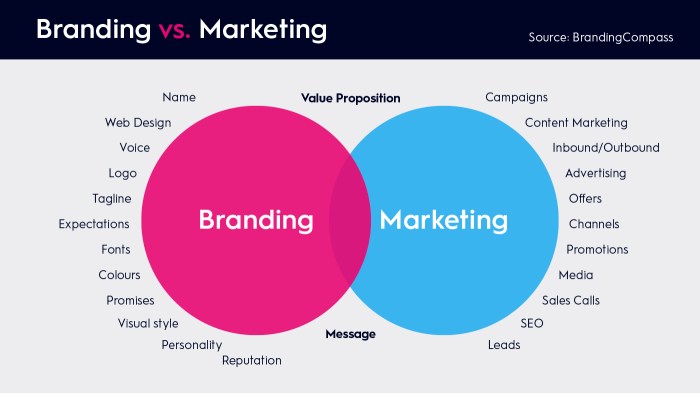
Understanding the difference between brand strategy and marketing strategy is crucial for any business aiming for sustainable growth. While often used interchangeably, these two concepts represent distinct yet interconnected approaches to achieving business objectives. Brand strategy focuses on building a strong and resonant brand identity, while marketing strategy centers on promoting and selling products or services to a target audience.
This exploration delves into the nuances of each, highlighting their unique contributions and the synergistic power of their integration.
We’ll examine the core components of each strategy, from defining a compelling brand purpose to crafting effective marketing campaigns. We’ll also analyze real-world examples of successful brand building and marketing initiatives, showcasing best practices and common pitfalls. Ultimately, the goal is to equip you with a clear understanding of how to leverage both brand and marketing strategies to maximize your business’s potential.
Defining Brand Strategy and Marketing Strategy
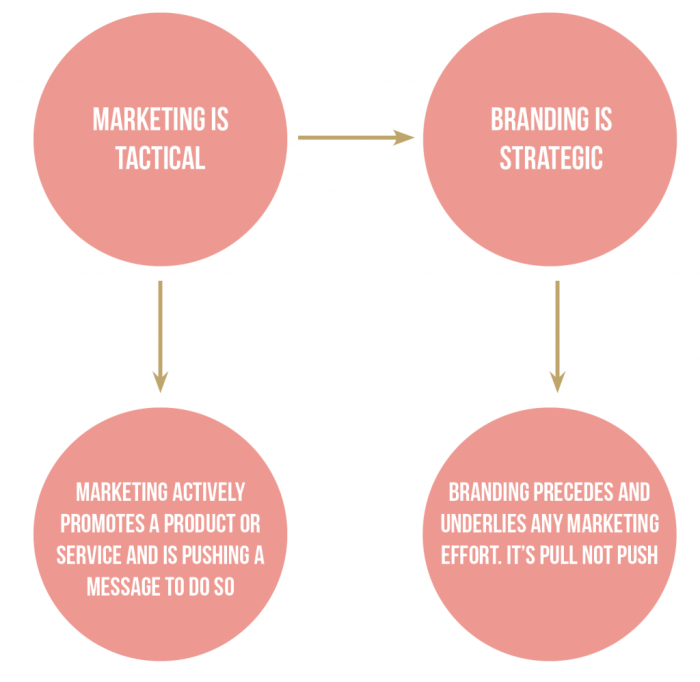
Brand strategy and marketing strategy are often used interchangeably, but they represent distinct yet interconnected approaches to achieving business objectives. Understanding their differences is crucial for effective business growth. While both contribute to overall success, brand strategy focuses on long-term vision and identity, while marketing strategy concentrates on short-to-medium-term actions to reach specific goals.Brand strategy defines the core essence of a company – its identity, values, and promise to its customers.
It’s the overarching framework that guides all aspects of the business, influencing everything from product development to customer service. Marketing strategy, on the other hand, Artikels the specific tactics and channels used to promote products or services and achieve measurable results like increased sales or market share. It’s the actionable plan to bring the brand promise to life.
There is overlap, however, as a strong brand strategy informs and underpins a successful marketing strategy. A well-defined brand provides a clear direction for marketing efforts, ensuring consistency and resonance with the target audience.
Brand Strategy and Marketing Strategy: Core Differences and Overlaps
Brand strategy focuses on building a strong and enduring brand identity, aiming for long-term brand equity. This involves defining the brand’s personality, values, and mission. Marketing strategy, conversely, focuses on short-term and medium-term objectives like increasing sales or brand awareness. It involves specific actions like advertising campaigns, social media strategies, and public relations initiatives. The overlap lies in the fact that a well-defined brand strategy provides the foundation for an effective marketing strategy.
Marketing tactics should always align with the brand’s overall identity and values to ensure consistent messaging and customer experience. A misalignment can lead to brand confusion and diluted messaging. For example, a luxury brand attempting a low-cost, high-volume marketing campaign would likely damage its carefully cultivated image.
Examples of Successful Brand Strategies and Their Corresponding Marketing Tactics
Consider Apple. Their brand strategy centers on innovation, design, and a premium user experience. This is reflected in their marketing tactics, which emphasize sleek product design, minimalist advertising, and a focus on creating a loyal customer community through exclusive product launches and retail experiences. In contrast, Nike’s brand strategy focuses on athletic performance and empowerment. Their marketing often features inspirational athletes and campaigns emphasizing personal achievement, using powerful imagery and storytelling in their advertising and social media presence.
These examples demonstrate how a strong brand strategy informs and directs the choice of marketing tactics, ensuring consistent and effective communication with the target audience.
The Role of Brand Purpose in Shaping Both Brand and Marketing Strategies
A clearly defined brand purpose is increasingly crucial in shaping both brand and marketing strategies. Brand purpose goes beyond simply making a profit; it articulates the company’s reason for existence and its contribution to society. A strong brand purpose provides a compelling narrative that resonates with customers and employees, fostering loyalty and engagement. For example, Patagonia’s commitment to environmental sustainability is central to its brand purpose and informs its marketing efforts, which often feature environmental advocacy and responsible sourcing.
Similarly, Dove’s focus on promoting real beauty and body positivity is reflected in its marketing campaigns, which challenge traditional beauty standards and celebrate diversity. Integrating brand purpose into both brand and marketing strategies builds trust, enhances brand reputation, and ultimately drives long-term business success. A company without a clear brand purpose may struggle to connect meaningfully with its audience, leading to less effective marketing and weaker brand identity.
Brand Equity
Brand equity is the intangible value of a brand, representing the cumulative impact of all marketing efforts and consumer experiences. It’s the overall perception and value consumers associate with a brand, ultimately influencing their purchasing decisions and brand loyalty. A strong brand equity translates directly into higher profitability, competitive advantage, and resilience against market fluctuations.Brand equity is not simply a marketing buzzword; it’s a crucial asset that needs to be carefully nurtured and protected.
Understanding its components is vital for developing effective brand and marketing strategies.
Key Components of Brand Equity
The core components of brand equity are interconnected and mutually reinforcing. A deficiency in one area can negatively impact the others, ultimately diminishing the overall brand value. These components are typically considered to be awareness, perceived quality, brand associations, and brand loyalty.
Awareness
Brand awareness refers to the extent to which consumers recognize and recall a brand within a given product category. High awareness implies that the brand readily comes to mind when consumers consider purchasing a product or service in that category. Strategies to increase brand awareness include advertising, public relations, social media marketing, and event sponsorships. For example, Coca-Cola’s ubiquitous presence in global culture ensures high brand awareness, even without consistent, heavy advertising.
Perceived Quality
Perceived quality reflects consumers’ judgment of a brand’s overall excellence, encompassing factors such as product performance, durability, reliability, and design. This perception is subjective and influenced by both objective product characteristics and consumer expectations. A high perceived quality leads to premium pricing potential and stronger customer preference. For instance, Apple consistently cultivates a perception of superior quality and design, justifying its premium pricing strategy.
Brand Associations
Brand associations encompass all the thoughts, feelings, and images linked to a brand. These can be positive, negative, or neutral. They’re shaped by marketing communications, brand experiences, and word-of-mouth. Strong, positive brand associations contribute significantly to brand preference and loyalty. For example, Nike successfully cultivates associations with athleticism, innovation, and empowerment, fostering strong brand loyalty.
Loyalty
Brand loyalty represents the extent to which consumers repeatedly purchase a brand’s products or services over its competitors. It’s the ultimate manifestation of positive brand equity. Loyal customers are less price-sensitive, more forgiving of occasional mistakes, and serve as valuable brand advocates. Brands like Disney have cultivated incredibly loyal customer bases through consistent quality and emotional connections.
Hypothetical Brand Equity Model: “NovaBrew” Coffee
Let’s consider a new coffee brand, “NovaBrew,” aiming for a premium, ethically sourced market position.
| Component | Contribution to NovaBrew’s Brand Equity | Strategy |
|---|---|---|
| Awareness | Initial awareness will be built through targeted social media campaigns focusing on sustainability and quality. Partnerships with ethical coffee farms will also increase visibility. | Influencer marketing, targeted advertising on platforms frequented by environmentally conscious consumers. |
| Perceived Quality | High-quality Arabica beans, unique roasting techniques, and elegant packaging will establish a perception of superior taste and craftsmanship. | Emphasis on origin stories, transparent sourcing, and sensory descriptions in marketing materials. |
| Brand Associations | NovaBrew will be associated with sustainability, ethical sourcing, and a sophisticated, mindful lifestyle. | Partnerships with environmental organizations, showcasing the positive social impact of the brand. |
| Loyalty | A loyalty program with rewards and exclusive content will encourage repeat purchases and foster a sense of community. | Subscription service, exclusive events for loyal customers, personalized communication. |
Real-World Examples: Strong and Weak Brand Equity
Brands like Apple (strong brand equity) benefit from consistent high-quality products, innovative design, and a strong brand story, resulting in high customer loyalty and premium pricing. Conversely, a brand with weak brand equity might be a generic store-brand product with low awareness, inconsistent quality, and few positive associations, leading to price sensitivity and low customer loyalty. The success of brands like Dove (strong focus on body positivity) and the struggles of numerous fast-fashion brands (often associated with poor labor practices and environmental concerns) further illustrate this dynamic.
Developing a Robust Brand Strategy
Crafting a robust brand strategy is crucial for long-term success. It’s more than just a logo and a tagline; it’s a comprehensive plan that guides all aspects of your business, ensuring consistent messaging and a strong connection with your target audience. A well-defined brand strategy provides a clear roadmap for marketing efforts, product development, and overall business growth.
A Step-by-Step Guide to Brand Strategy Development
Developing a comprehensive brand strategy involves a structured approach. This process ensures all key elements are considered, leading to a cohesive and effective brand identity. The steps below Artikel a practical methodology.
- Define Your Target Audience: Thoroughly research and define your ideal customer. Consider demographics, psychographics, needs, pain points, and online behavior. Create detailed buyer personas to represent your target segments. For example, a sustainable clothing brand might target environmentally conscious millennials and Gen Z consumers interested in ethical fashion.
- Conduct a Competitive Analysis: Analyze your competitors’ strengths and weaknesses. Identify market gaps and opportunities where your brand can differentiate itself. Consider their brand positioning, marketing strategies, and customer feedback. This helps pinpoint unique selling propositions.
- Define Your Brand Positioning: Determine how you want your brand to be perceived in the market. This involves articulating your unique value proposition and communicating it clearly to your target audience. For instance, a luxury car brand might position itself on exclusivity and superior performance.
- Develop Your Brand Identity: Create a visual identity that reflects your brand positioning. This includes your logo, color palette, typography, and overall visual style. Ensure consistency across all platforms. Consider the feeling you want your brand to evoke. A tech startup might choose a modern, minimalist design, while a traditional bakery might opt for a warm, rustic aesthetic.
- Craft Your Brand Messaging: Develop a consistent brand voice and tone. This should reflect your brand personality and resonate with your target audience. All communication should align with this messaging. A playful brand might use humorous language, while a serious brand might adopt a more formal tone.
- Establish Brand Guidelines: Create a comprehensive document outlining your brand’s visual identity, messaging, and overall brand standards. This ensures consistency across all touchpoints and prevents brand dilution. This document acts as a guide for all internal and external stakeholders.
Conducting a Brand Audit
A brand audit provides a thorough assessment of your current brand health. It involves evaluating various aspects of your brand to identify strengths, weaknesses, opportunities, and threats. This allows for informed decision-making and strategic adjustments.
- Brand Awareness Assessment: Measure your brand’s visibility and recognition within your target market. This could involve surveys, social media listening, and analyzing website traffic.
- Brand Perception Analysis: Understand how your target audience perceives your brand. Conduct surveys, focus groups, and social media monitoring to gather qualitative and quantitative data.
- Competitive Landscape Review: Re-evaluate your competitive landscape to identify shifts in the market and emerging threats or opportunities.
- Internal Brand Consistency Audit: Assess the consistency of your brand messaging and visual identity across all touchpoints. This includes your website, social media, marketing materials, and customer service interactions.
- Customer Feedback Analysis: Gather and analyze customer feedback from various sources, such as reviews, surveys, and social media comments. Identify areas for improvement and address customer concerns.
Brand Positioning Strategies
Different brand positioning strategies cater to various market needs and competitive landscapes. Choosing the right strategy is crucial for effective brand building.
| Positioning Strategy | Description | Example | Pros |
|---|---|---|---|
| Value-Based | Focuses on offering superior value for the price. | Walmart (everyday low prices) | Attracts price-sensitive customers; builds strong customer loyalty. |
| Differentiation | Highlights unique features or benefits that set the brand apart from competitors. | Apple (innovative design and user experience) | Commands premium pricing; builds a strong brand identity. |
| Niche | Targets a specific, narrowly defined market segment. | Luxury handcrafted furniture brand | Strong brand loyalty; less competition; potential for premium pricing. |
| Competitive | Positions the brand directly against a key competitor, highlighting superior attributes. | Pepsi vs. Coca-Cola | Can increase brand awareness; directly addresses customer choice. |
Integrating Brand Strategy with Marketing Strategy
A well-defined brand strategy serves as the compass guiding all marketing activities. It provides a clear understanding of the brand’s identity, target audience, and value proposition, ensuring that marketing efforts are aligned and contribute to a cohesive brand experience. Without this foundational strategy, marketing campaigns risk becoming disjointed and ineffective, failing to resonate with the target audience and build brand equity.A robust brand strategy informs every aspect of marketing, from messaging and creative execution to channel selection and campaign measurement.
It dictates the tone of voice, the visual elements used, and the overall narrative communicated to consumers. This strategic alignment ensures consistency and reinforces the brand’s identity across all touchpoints, fostering brand recognition and loyalty.
Marketing Campaigns Demonstrating Successful Integration
Successful integration of brand strategy and marketing objectives is evident in numerous campaigns. Consider Dove’s “Real Beauty” campaign, which challenged conventional beauty standards and resonated deeply with its target audience by aligning its marketing with its brand’s commitment to inclusivity and self-acceptance. The campaign’s success stemmed from its authentic portrayal of real women, a message directly reflecting Dove’s brand promise.
Similarly, Nike’s “Just Do It” campaign, while simple, effectively communicated its brand’s core value of empowerment and perseverance, resonating across diverse demographics and inspiring action. The campaign’s longevity and impact are a testament to the power of a clearly defined brand strategy driving marketing efforts.
Consistent Messaging and Brand Voice Across Touchpoints
Consistent messaging and brand voice are crucial for creating a unified brand experience. Imagine a luxury car brand using high-quality imagery and sophisticated language on its website but employing informal slang and low-resolution images on its social media. This inconsistency would confuse consumers and dilute the brand’s perceived value. Maintaining a unified brand voice across all platforms – from website copy and social media posts to email marketing and advertising – reinforces brand identity and builds trust.
This consistency allows for the development of a recognizable and memorable brand personality, ultimately fostering stronger customer relationships and loyalty. For example, a company with a playful brand personality might use humorous memes and engaging video content on social media, while maintaining a professional tone in its formal business communications. This strategic differentiation in tone, while staying consistent with the core brand personality, ensures effective communication across different channels.
Brand Management
Sustaining brand value isn’t a one-time achievement; it’s an ongoing process requiring consistent effort and strategic adaptation. A strong brand isn’t built overnight, and neither is it maintained without diligent attention to its health and reputation. Effective brand management ensures the brand remains relevant, resonant, and valuable to its target audience, ultimately driving long-term business success.Brand management necessitates a proactive approach, encompassing continuous monitoring, rigorous performance measurement, and swift, effective responses to challenges.
This ensures the brand remains aligned with its core values and continues to deliver on its brand promise. Failure to do so can lead to brand erosion, decreased market share, and ultimately, financial losses.
Ongoing Brand Monitoring and Performance Measurement
Regular monitoring and measurement are crucial for understanding brand performance and identifying areas for improvement. This involves tracking key metrics that reflect brand health and the effectiveness of brand management strategies. By continuously analyzing data, businesses can make informed decisions, optimize their strategies, and proactively address potential issues before they escalate. Ignoring these signals can lead to missed opportunities and significant setbacks.
Key Metrics for Tracking Brand Health
Several key metrics provide insights into brand health and the success of brand management initiatives. These metrics can be broadly categorized into awareness, perception, and performance. Awareness metrics include brand recall and recognition. Perception metrics focus on brand attributes, such as quality, trustworthiness, and innovation, often measured through surveys and social listening. Performance metrics include market share, sales growth, and customer loyalty.
A comprehensive approach involves tracking a balanced portfolio of these metrics to gain a holistic view of brand health. For example, a company might track its social media engagement alongside customer satisfaction scores to get a complete picture of how its brand is performing.
Managing Brand Crises and Maintaining Positive Brand Reputation
Brand crises are inevitable; however, the way a company responds can significantly impact its long-term reputation. A well-defined crisis management plan is essential. This plan should include proactive measures to identify potential risks, establish clear communication protocols, and designate a crisis management team. Rapid and transparent communication is critical during a crisis. Addressing concerns honestly and empathetically can help mitigate damage and maintain customer trust.
Conversely, a slow or inadequate response can severely damage brand reputation and lead to long-term negative consequences. For instance, a company facing a product recall should immediately communicate the issue to customers, clearly outlining the steps being taken to address the problem. A sincere apology and commitment to rectifying the situation can go a long way in preserving customer trust and minimizing the impact of the crisis.
Case Studies
Analyzing real-world examples of brand strategy implementation provides invaluable insights into what constitutes success and failure. Examining both triumphs and pitfalls illuminates best practices and potential pitfalls for businesses striving for brand dominance. This section will delve into specific case studies, highlighting key strategic decisions and their outcomes.
Apple’s Brand Strategy Success
Apple’s consistent brand strategy, centered on design, user experience, and a premium price point, has fueled remarkable success. Their focus on creating a cohesive ecosystem, integrating hardware, software, and services, has fostered strong brand loyalty. This holistic approach, coupled with effective marketing campaigns that emphasize simplicity and elegance, has cultivated a powerful brand identity that resonates with consumers globally.
Apple’s consistent messaging, high-quality products, and strategic control over the entire user experience have contributed significantly to its enduring success. The company’s willingness to innovate and adapt, while remaining true to its core brand values, has ensured its continued relevance in a rapidly changing technological landscape.
Coca-Cola versus PepsiCo: A Comparative Analysis
Coca-Cola and PepsiCo, two titans of the beverage industry, employ contrasting brand strategies. Coca-Cola focuses on a classic, nostalgic image, leveraging its heritage and emotional connection with consumers. PepsiCo, on the other hand, often positions itself as a more youthful, modern brand, targeting younger demographics through trendier marketing campaigns and product diversification. While both companies benefit from strong brand recognition and established market share, their different strategic approaches highlight the diverse paths to success within a single industry.
Coca-Cola’s strategy emphasizes brand heritage and emotional appeal, while PepsiCo’s strategy relies on adaptability and targeting specific consumer segments. This difference in approach demonstrates that there isn’t a single “best” strategy, but rather various approaches that can achieve success depending on the target audience and market conditions.
Blockbuster’s Failure to Adapt
Blockbuster’s failure to adapt its business model to the rise of streaming services serves as a cautionary tale. Initially dominant in the video rental market, Blockbuster failed to recognize and respond effectively to the disruptive potential of Netflix and other streaming platforms. Their reluctance to embrace digital distribution and online streaming led to a rapid decline in market share and ultimately, bankruptcy.
This case underscores the importance of proactive adaptation in the face of changing market conditions. Blockbuster’s inability to foresee and respond to the shift in consumer preferences and technological advancements resulted in a significant loss of market share and ultimately, business failure. The company’s rigid adherence to its existing business model, without sufficient investment in innovation or adaptation, proved fatal.
The Future of Brand Strategy
The landscape of brand strategy is undergoing a rapid transformation, driven by technological advancements and evolving consumer behavior. Understanding these shifts is crucial for businesses aiming to maintain relevance and competitive advantage in the years to come. The convergence of digital technologies, data analytics, and a heightened focus on sustainability is reshaping how brands are built, managed, and experienced.The digital landscape presents both significant challenges and unparalleled opportunities for brand building and management.
While the sheer volume of online channels and the fragmented nature of consumer attention can make reaching target audiences more complex, it also provides unprecedented opportunities for personalized engagement, real-time feedback, and data-driven optimization. Successfully navigating this environment requires a strategic approach that embraces agility, data-driven decision-making, and a deep understanding of the digital consumer.
Emerging Trends and Technologies Impacting Brand Strategy
The rise of artificial intelligence (AI), particularly in areas like personalized marketing and customer service chatbots, is significantly impacting brand strategy. AI-powered tools can analyze vast amounts of data to identify consumer preferences, predict future trends, and personalize brand messaging with unprecedented accuracy. For example, Netflix utilizes AI to recommend shows and movies to its subscribers, enhancing user experience and driving engagement.
Simultaneously, the metaverse and Web3 technologies are creating new opportunities for immersive brand experiences, allowing brands to interact with consumers in virtual environments and build deeper emotional connections. Consider brands like Nike, which are creating virtual apparel and experiences within the metaverse, expanding their brand reach and creating new revenue streams. Finally, the increasing importance of sustainability and ethical sourcing is forcing brands to incorporate these values into their core strategies, demonstrating a commitment to social and environmental responsibility.
Companies like Patagonia, known for their commitment to environmental sustainability, have seen increased brand loyalty and positive consumer perception as a result.
Challenges and Opportunities in the Digital Landscape
The digital landscape presents both challenges and opportunities for brand building. One key challenge is maintaining brand consistency across multiple online platforms and channels. The sheer number of social media platforms, websites, and online marketplaces requires a sophisticated strategy to ensure a unified brand message and experience. Another challenge is managing online reputation and responding effectively to negative feedback or crises.
A single negative review or social media post can quickly spread and damage a brand’s reputation, requiring proactive monitoring and a swift response mechanism. However, the digital landscape also offers unparalleled opportunities for building brand awareness and engagement. Social media platforms provide direct access to target audiences, enabling brands to build communities, engage in two-way conversations, and gather valuable consumer insights.
Data analytics tools allow brands to track key metrics, measure the effectiveness of their marketing campaigns, and make data-driven adjustments to optimize their strategies. Furthermore, the ability to personalize brand messaging and target specific customer segments allows for more effective and efficient marketing efforts, leading to improved ROI.
Hypothetical Brand Strategy for a New Emerging Market
Let’s consider a hypothetical scenario: a company, “EcoFlow,” producing sustainable, portable power solutions, is entering the rapidly growing market of off-grid living and sustainable tourism in Southeast Asia. Their brand strategy would focus on several key pillars. First, establishing a strong brand identity that emphasizes sustainability, reliability, and adventure. This would involve creating visually appealing branding, a compelling brand story that resonates with the target audience, and a consistent brand voice across all communication channels.
Second, building a strong online presence through targeted social media marketing and influencer collaborations. This would involve partnering with travel bloggers, adventure enthusiasts, and eco-conscious influencers to promote the product and reach a wider audience. Third, focusing on building trust and credibility through transparent communication, emphasizing the product’s environmental benefits, and showcasing positive customer reviews. This could involve creating educational content about sustainable living and off-grid power solutions, and participating in relevant industry events and exhibitions.
Finally, implementing a localized marketing strategy that considers the cultural nuances and language preferences of the target market. This would involve translating website content, adapting marketing messages to resonate with local values, and potentially partnering with local distributors and retailers. By focusing on these key elements, EcoFlow can successfully establish its brand in the emerging market and build a strong foundation for long-term growth.
In conclusion, a robust brand strategy provides the foundation upon which successful marketing campaigns are built. By clearly defining your brand identity, understanding your target audience, and crafting a consistent brand message, you can create a powerful and enduring connection with consumers. Integrating a well-defined brand strategy with a targeted marketing approach ensures that all your efforts work in harmony to achieve your business goals, leading to sustainable growth and long-term brand equity.
The key takeaway is that these are not opposing forces but rather complementary elements that, when aligned, unlock significant potential.
FAQ Compilation
What is the difference between a brand promise and a brand positioning?
A brand promise is what a company pledges to deliver to its customers, while brand positioning is how a company wants to be perceived in the market relative to its competitors.
How often should a brand strategy be reviewed and updated?
Brand strategy should be reviewed and updated regularly, ideally annually, or more frequently if the market or business undergoes significant changes.
Can a small business afford a robust brand strategy?
Yes, even small businesses can benefit from a well-defined brand strategy. A simple, focused approach can be just as effective as a complex one, and many resources are available to help small businesses develop their brand strategy.
What role does market research play in brand strategy?
Market research is crucial for informing all aspects of brand strategy, from understanding target audiences to identifying competitive advantages and shaping brand positioning.


